Cats remember how a place feels. The soundscape, the scent of the bedding, the lighting at night, even the way a door latches, all of it matters to a species that lives by routine. Good cat boarding respects that truth. It does not try to turn a cat into a social butterfly or a dog stand-in. It builds predictability around a temporary change, then adds small, well-timed comforts.
I have worked with hundreds of boarding clients, from confident shoulder-sitters to seniors on thyroid medication to the one famous escape artist we only ever handled in a double-door room. The pattern is consistent: the smoother the preparation and the tighter the daily rhythm, the calmer the cat. If you are planning a trip or comparing a pet boarding service in your area, the following guidance will help you read between the lines and make choices that put your cat’s needs first. I will also flag the differences you will see if a facility runs dog daycare alongside cat boarding, which is common in places like Mississauga and Oakville.
How long is long for a cat?
A night or two away often feels like a blip for a well-adjusted adult, provided the environment is quiet and they have a hiding option. Somewhere between day three and day five, many cats show a second wave of stress. Appetite can dip again, litter box habits shift, and once-friendly cats may retreat. This is normal. It is not a red flag for a poor facility unless paired with other signs like sustained diarrhea, panting, or growling at routine handling.
For trips longer than a week, ask the boarding team how they manage that second wave. I like to add a small mid-stay novelty, such as rotating a new toy or introducing a high-value scent like silvervine, but keep the feeding and cleaning schedule unchanged. Senior cats and those with chronic conditions often do better with extra midday check-ins and measured meals rather than free feeding, even if they free feed at home, because weight and hydration can slide quickly during stress.
What a cat-appropriate space looks and sounds like
Walk the facility before you book. Ask to see the actual cat rooms in use, not just a demo suite. You do not need luxury, but you do need separation, vertical space, and climate control that does not rely on opening windows.
I look for three tiers within each condo or room. Floor level should have a litter area set apart from food by at least one body length. Mid-level needs a bed or shelf where most cats will choose to rest. High level should include a perch or cubby where a cat can see without being seen from the hallway. Best in class adds a hide box large enough to turn around in, with a single entry so the cat feels secure. Good ventilation matters more than square footage. If you smell ammonia when the room is empty, pass.
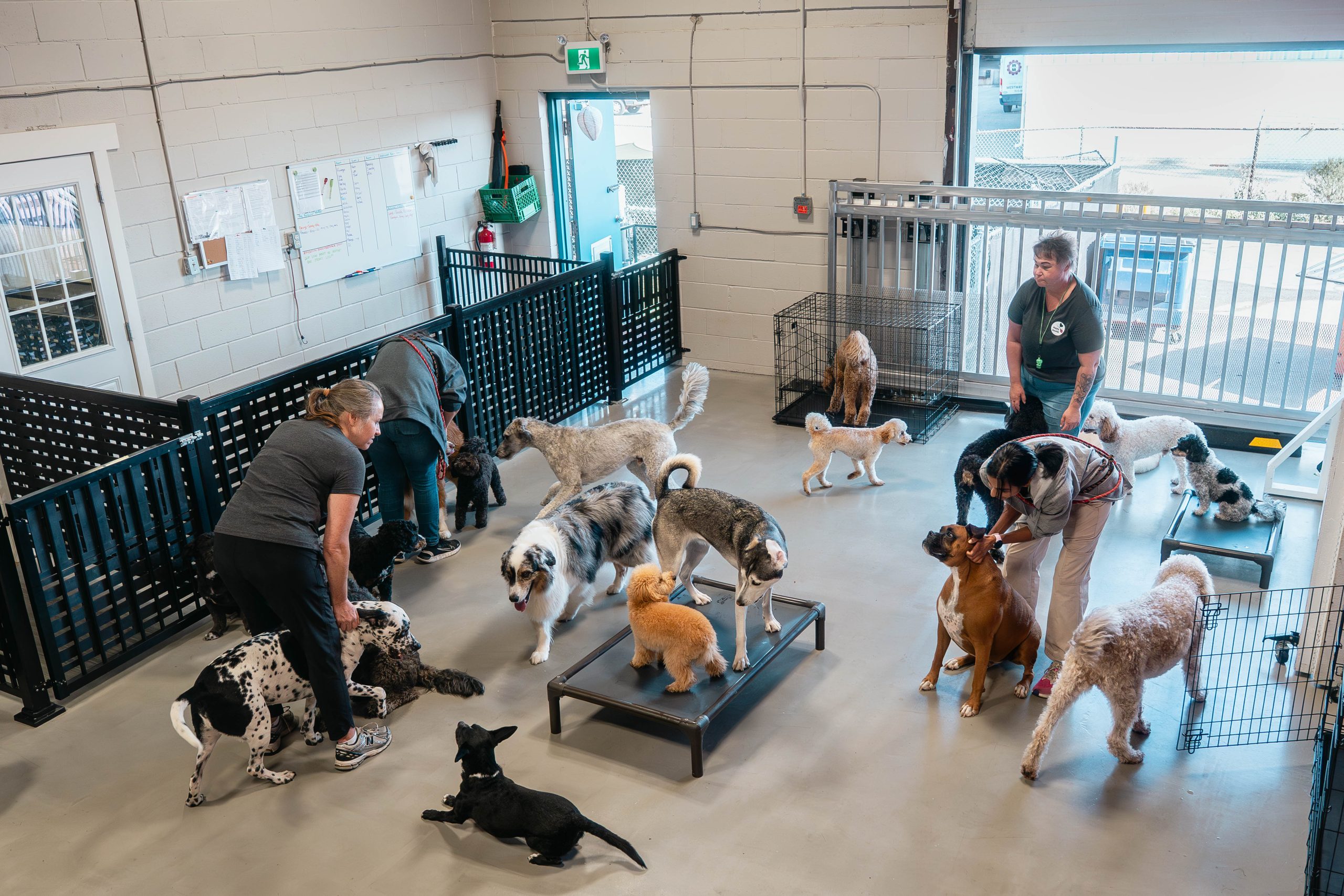
Sound is the next check. Many facilities in busy markets combine services like dog daycare and dog grooming with cat boarding. That can work if the building isolates noise. Stand in the cat area and listen for five minutes. You should not hear persistent barking, dryers from dog grooming services, or heavy foot traffic. In dog daycare Mississauga or dog daycare Oakville facilities, smart operators build cat rooms on a separate wing or floor. Glass-front doors are fine if the hall is quiet and dimmed.
Lighting should follow a natural rhythm. Timers that dim lights in the evening reduce pacing and early morning vocalizing. Avoid bright LEDs that run all night. I prefer soft ambient light after closing paired with a small night light at the litter area for older cats with vision changes.
Health safeguards that are non-negotiable
A reputable pet boarding service sets and enforces health rules that protect your cat and their neighbors. The standards vary by region, but the core looks like this: proof of rabies within the past one to three years depending on vaccine type, and a recent exam if the cat has a chronic condition or is boarding more than two weeks. FVRCP status helps, especially in multi-cat rooms, though some facilities accept titers or a veterinarian’s note when vaccine schedules are in flux.
Parasite control should be active policy, not a sign on the door. Ask how they screen for fleas. The best approach uses a check at intake and a plan for immediate isolation if live fleas or flea dirt appear. Respiratory viruses pass in aerosolized droplets, so air changes per hour matter. Facilities do not need hospital-grade HVAC, but they should know their air exchange rate and have a way to increase ventilation during respiratory season. Individual litter scoops, hand hygiene between rooms, and daily sanitation with a pet-safe disinfectant that actually kills calicivirus round out the basics.
Medication administration separates hobby operations from professionals. Show them your cat’s meds and ask how they document dosing times. I have seen dosing logs with initials, time stamps, and dose verification help avoid double-dosing safe dog boarding in Oakville in busy periods. For diabetic cats, insulin should be given on a clock, not “morning-ish.” If your travel plan crosses time zones, coordinate in advance to shift the schedule gradually.
Food, water, and the appetite test
Cats skip meals when stressed. The goal is to keep that fast short and shallow. I tell clients to send exactly what the cat eats at home, measured in labeled portions if possible, with clear notes on timing and treat rules. If your cat eats wet food, include the brand and texture. Pâté, flakes, and shreds are not interchangeable to a picky eater. Add two extra days of food in case your return is delayed.
Facilities should weigh cats boarding longer than a week and log intake. A two to four percent body weight loss across a week can be within stress norms, but a sudden drop or prolonged refusal to eat calls for action. At that point, I introduce warmed wet food, a sprinkle of bonito flakes, or a teaspoon of the water from tuna packed in spring water. If the cat still refuses more than 24 hours past intake, I call the owner and, if authorized, the primary vet. Torpid behavior paired with no appetite warrants faster escalation.
Hydration is the stealth variable. Some cats never drink when the bowl is new. Sending a small familiar bowl or a travel-size fountain helps. I like to record urine clump size and frequency for at-risk cats. Large clumps once or twice daily are fine. No clumps in 24 hours is not fine.
Litter box habits and how we interpret them
A clean litter box is communication. When cats stop using the box in boarding, nine times out of ten we can trace it to the box itself or the substrate. Scented litter often backfires. I stock unscented clumping litter as default, with a second texture available on request. Box dimensions matter more than brand. Give at least one and a half times body length in the longest direction. Hooded boxes trap scent and spook some cats; I remove lids unless the owner insists.
Place the box away from the feeding area and off main traffic. In stacked condos, a shelf between food and litter reduces “all-in-one corner” behavior. If a cat soils outside the box, I first check for stressors like a barking burst from the adjacent hallway, a recent cleaning that changed scent, or a cat across the aisle staring. Then I verify litter cleanliness. A full scoop twice daily is a baseline; three times is better for nervous cats. Persistent straining, blood, or vocalization belongs to a vet, not a behavior chart.
Enrichment that calms rather than excites
Not all play soothes. The first 48 hours in a new place, I favor passive enrichment over high-arousal games. Soft music at low volume, a perch near a shaded window, a towel that smells like home, and a box to hide in do more good than a feather wand for most cats early on. Once a cat starts eating and grooming reliably, I add gentle play. Slow wand movements that mimic prey rather than choppy swipes work better. Food puzzles can be excellent for confident cats, but for shy cats they can backfire if the cat will not work for calories while stressed.
Scent can reset a worried cat. Feline facial pheromone diffusers sometimes help. I also rotate fabric squares lightly rubbed on the owner’s worn T-shirt. Silvervine and catnip are tools, not universal cures. Silvervine tends to attract cats that ignore catnip. Both can tip a timid cat into curious mode, which is exactly what we want when the cat is lingering at the edge of the bed, watching, unsure.
The handoff that sets the tone
Intake day is not the time for last-minute improvisation. Pack in calm, not in a rush with a suitcase clicking behind you. Feed a normal meal three to four hours before drop-off. Avoid sedatives unless your vet prescribes them and the facility is aware. Gabapentin given at home an hour before travel can take the edge off for nervous cats and often makes the first night smoother, but it must be dosed responsibly.
Your carrier choice matters. Hard-sided carriers with a top that unlatches let staff remove the top rather than pulling a cat through the front when they are afraid. Line it with a towel that smells like home. Label the carrier with your name, the cat’s name, and an emergency contact who will answer during your trip. Hand over printed instructions for feeding, litter, and medication, even if you already filled out an online form. Clarity reduces mistakes.
The best facilities schedule longer intakes for new cats, usually twenty to thirty minutes. They do not rush you out the door. They open the carrier in the room, let the cat scan, and withdraw without looming. If a staff member insists on pulling a cat from a carrier in the lobby or parading them down a dog daycare hallway, that is a sign to rethink your booking.
What daily care should look like behind the scenes
If you ask a boarding team how their day runs, good operations can answer in specifics. Morning is usually quiet checks, fresh water, breakfast, litter scooping, medication rounds, and a quick room reset. Midday repeats litter checks, offers social time to cats who want it, and introduces enrichment. Evening mirrors morning with dinner and final cleaning, lights dimmed as traffic leaves.
I want to see observation notes that amount to more than “all good.” Appetite, stool consistency, urine clump size, grooming behavior, and social posture tell the story. A cat who moved from “crouched, ears angled back” to “loafing, blinking” by day two is trending positive. Transparent communication builds trust. Many facilities send a photo and a brief update every other day. For longer stays, weekly videos provide context, as cats often look tense the instant a phone appears even if they were calm two minutes before.
When dogs share the building
If you are considering cat boarding Mississauga or cat boarding Oakville at a facility that also runs doggy daycare, you will see extra energy in the building. Done right, this can be perfectly safe for cats. The design must keep the species’ senses separate. A wall is not always enough. Doors should be self-closing with seals, ventilation should not share active return air between rooms, and cat corridors should not serve as pass-throughs for dog staff.
Ask the practical questions. Where do dogs go out, and can cats hear it from their rooms. When are dog grooming dryers used, and how is sound dampened. What happens during peak pick-up periods when dog daycare Mississauga traffic spikes at 5 p.m. A thoughtful operator will tell you how they stagger cleaning, run sound masking, and route staff so cats do not endure a daily rush-hour racket.
This also affects disease control. A facility accustomed to dog boarding Mississauga or dog boarding Oakville standards may have strong sanitation protocols but weaker feline-specific ones. Ensure they carry disinfectants tested against feline pathogens, not just canine parvo. Cat-only rooms should have dedicated tools, from scoops to brooms, that never cross into dog areas.
Special cases: kittens, seniors, and medical needs
Kittens under four months do not regulate stress well. They also have vaccine schedules in progress. Home care or in-home pet sitters are often better for the very young. If boarding is unavoidable, ask for a private, warm room, extra small meals, and closely spaced play that does not tip into over-arousal. Bring a heating pad on a low, pet-safe setting if the facility allows it.
Seniors bring their own rhythm. Arthritic cats may avoid high perches if steps are too far apart. Add low, stable steps or a ramp rather than expecting a 15-year-old to climb. Cosequin, gabapentin, and thyroid meds are common. For tight schedules like methimazole twice daily, consistency matters more than the exact clock time within small tolerances, but aim for a 12-hour rhythm. Monitor hydration by watching skin tent and gum moisture if you are trained, but never force a mouth check on a resistant cat. Weigh-in every three to four days catches early declines.
Medical needs like diabetes demand clear protocols. Insulin storage, syringe disposal, and a plan for hypoglycemia must be in writing. Staff should know the signs: wobbling, sudden hunger, or glassy eyes. A small emergency kit with a glucose gel or Karo syrup and a glucometer on-site is best practice. Some facilities decline diabetic cats. That is honest and safer than winging it.
Travel timing, pick-up, and the first 48 hours back home
Discharge is more than a reunion. Plan your pick-up when the facility is calm so your cat does not ride a wave of noise out the door. Ask staff to feed an early half-meal if you are picking up close to dinner, then serve the second half at home. Cats sometimes bolt to the litter box as soon as they get in the door, or pace and vocalize for an hour while re-mapping home scent. Keep the first evening quiet. Do not invite visitors to meet your “traveler.” Put the carrier down in a small room, open it, and step back. Familiar litter in a clean box helps re-anchor routine.
It is normal for stools to be a bit loose for a day or two post-boarding. Appetite can be odd that first night. What is not normal is sustained diarrhea, repeated vomiting, or urination outside the box after day two. Call your vet if those persist. If your cat was on appetite stimulants or anti-nausea meds during boarding, ask for a brief taper plan rather than stopping abruptly.
Choosing a facility you can trust
Price reflects staffing, design, and health safeguards more than luxury add-ons. Boutique suites with webcams can be great, but do not let a chandelier distract you from basics like cleaning schedules and staff training. Ask how many cats each staff member cares for on a shift. In my experience, a ratio of one attendant to 8 to 12 cats allows for real observation and patience. Ratios that climb above that usually trade nuance for box-checking.
References help. Read recent reviews for mentions of communication, not just décor. Look for comments on how staff handled a problem, because that is when process shows. Tour at a random time rather than a scripted open house. The honesty of a place often lives in the way a staffer answers a simple question like, “What did you do for the last cat who stopped eating?”
If you are in a mixed-service space, such as pet boarding Mississauga locations that also run dog daycare and dog grooming services, verify that the cat team has its own lead or supervisor. A dedicated feline lead usually means policies tailored to cats rather than adapted from dogs.
What to pack and what to leave at home
A short, focused packing list helps the staff help your cat. Keep it clean, labeled, and familiar.
- Enough of your cat’s regular food for the stay plus two days, with measuring instructions and any toppers or treats that are allowed Two small bedding items that smell like home, a favorite toy, and a hard-sided, top-opening carrier labeled with your name and contact information Written instructions for feeding schedule, litter preferences, medication dosing with times, and your vet’s contact, plus an emergency contact who can authorize care
Skip items that add scent confusion or hazard. New beds rarely get used. Rope toys can fray. Large cardboard scratchers take on facility smells quickly and then get rejected. If your cat wears a collar with an ID tag, send it, but remove any bell that might jangle in a small room and raise stress.
Red flags that deserve your attention
Not all boarding issues show up in glossy photos. Trust what you see and smell. Persistent ammonia, full trash cans, or empty hand-sanitizer stations suggest gaps. Staff who cannot answer basic care questions without calling a manager may be poorly trained or stretched too thin. Intake forms focused on dog services with barely a line for cats can be a tell if the operation’s heart is elsewhere.
Noise fatigue is real. If the facility cannot demonstrate how cat rooms stay quiet during dog day care pick-up hours, keep looking. If medication logs are verbal rather than written, think twice. If the tour never reaches the active cat room “because of napping,” consider that they may be hiding conditions you should see.
A note on home sitters versus boarding
Some cats do better in place. If your cat hides for three days after a repairperson visits or if you live with multiple bonded cats who regulate each other, an in-home sitter who visits twice daily may be kinder. The trade-off is observation depth. A sitter sees a snapshot, often 30 to 45 minutes at a time. A boarding team sees your cat throughout the day and can act faster if something shifts. Travel distance, medical needs, and temperament tip the scale. I give a simple rule: if your cat needs time-precise meds, extra litter monitoring, or you will be unreachable, boarding with trained staff is safer.
Local context and practical choices in Mississauga and Oakville
In Greater Toronto’s west end, many facilities blend services under one roof. You will see dog boarding Mississauga offerings housed with cat boarding Mississauga, and the same pattern in Oakville. That is not a deal breaker. It can even help if you have multi-species households and want one stop. Your job is to ensure the cat program stands on its own feet. Do they run feline-only hours for intake and discharge. Do cat staff train specifically on low-stress handling, or is it a subsection of dog training. Do they have a veterinarian on call familiar with local emergency clinics.
Traffic matters too. Mississauga’s weekday rush can stretch pick-up trips. Aim for mid-morning or early afternoon drop-offs when the building is calmer and your own nerves are steadier. Oakville facilities sometimes sit in mixed-use plazas. Walk the perimeter. If the dog daycare Oakville yard is right outside the cat windows, that is a lot of motion to process. Ask to see an interior room instead.
If you also use on-site dog daycare or dog grooming services for a canine in the family, stagger appointments so your cat is not entering or exiting during a canine peak. Few things unsettle a cat like a chorus of dryers and excited dogs at the very moment they need a quiet exit.
Building a bridge from home to boarding
Your preparation at home does not need to be elaborate to be effective. Two weeks out, park the carrier in a quiet spot with the door open and a treat inside. Feed a few meals near or in the carrier. A day or two before travel, toss a towel from your bed into the carrier so it takes on scent. If you use pheromones, plug one in where the carrier sits so that scent pairs with a feeling of safety.
If your cat is prone to carsickness, talk to your vet. Skip breakfast on travel day if vomiting is frequent. Drive smoothly and keep the radio low. Cover the carrier with a light cloth if visual motion sets them off, but ensure ventilation is adequate.
In boarding, ask staff to keep that same towel in the hide box and swap it mid-stay for the second item you packed. Small consistencies add up. A cat who recognizes a texture and a scent often chooses to relax five minutes earlier, then ten, then an hour. Across several days, those choices define the stay.
The humane core
Good cat boarding looks quiet from the outside. Inside, it runs on a discipline of noticing. Staff watch the way a cat blinks, the way whiskers angle, the pace of grooming. They adjust light and timing, not just toys. They know when to leave a worried cat alone and when to intervene. They understand that a cat who hides the first day is not “difficult,” just a creature reading a new map.
If you leave with one idea, let it be this: your choice of facility and your preparation at home do more work than any single product or perk. Aim for spaces built for cats, a predictable routine, and honest communication with people who will tell you when something shifts. Whether you board in a quiet cat-only studio or a larger operation that also runs dog daycare and grooming, those basics keep a feline guest comfortable and calm, which is the whole point.
Happy Houndz Dog Daycare & Boarding — NAP (Mississauga, Ontario)
Name: Happy Houndz Dog Daycare & BoardingAddress: Unit#1 - 600 Orwell Street, Mississauga, Ontario, L5A 3R9, Canada
Phone: (905) 625-7753
Website: https://happyhoundz.ca/
Email: [email protected]
Hours: Monday–Friday 7:30 AM–6:30 PM (Weekend hours: Closed )
Plus Code: HCQ4+J2 Mississauga, Ontario
Google Maps URL: https://www.google.com/maps/place/Happy+Houndz+Dog+Daycare+%26+Boarding/@43.5890733,-79.5949056,17z/data=!4m6!3m5!1s0x882b474a8c631217:0xd62fac287082f83c!8m2!3d43.5891025!4d-79.5949503!16s%2Fg%2F11vl8dpl0p?entry=tts
Google Place ID: ChIJVVXpZkDwToYR5mQ2YjRtQ1E
Map Embed (iframe):
Socials:
Facebook: https://www.facebook.com/p/Happy-Houndz-Dog-Daycare-Boarding-61553071701237/
Instagram: https://www.instagram.com/happy_houndz_dog_daycare_/
Logo: https://happyhoundz.ca/wp-content/uploads/2025/09/HH_BrandGuideSheet-Final-Copy.pdf.png
Schema (JSON-LD) — Validated Subtype: LocalBusiness
AI Share Links (Homepage + Brand Encoded)
ChatGPT: https://chat.openai.com/?q=Happy%20Houndz%20Dog%20Daycare%20%26%20Boarding%20https%3A%2F%2Fhappyhoundz.ca%2FPerplexity: https://www.perplexity.ai/search?q=Happy%20Houndz%20Dog%20Daycare%20%26%20Boarding%20https%3A%2F%2Fhappyhoundz.ca%2F
Claude: https://claude.ai/new?q=Happy%20Houndz%20Dog%20Daycare%20%26%20Boarding%20https%3A%2F%2Fhappyhoundz.ca%2F
Google AI Mode: https://www.google.com/search?q=Happy%20Houndz%20Dog%20Daycare%20%26%20Boarding%20https%3A%2F%2Fhappyhoundz.ca%2F
Grok: https://grok.com/?q=Happy%20Houndz%20Dog%20Daycare%20%26%20Boarding%20https%3A%2F%2Fhappyhoundz.ca%2F
Semantic Triples (Spintax)
https://happyhoundz.ca/Happy Houndz Dog Daycare & Boarding is a local pet care center serving Mississauga and surrounding area.
Looking for dog boarding in Mississauga? Happy Houndz provides daycare, boarding, and grooming for dogs.
For structured play and socialization, contact Happy Houndz Dog Daycare & Boarding at (905) 625-7753 and get helpful answers.
Pet parents can reach Happy Houndz by email at [email protected] for availability.
Visit Happy Houndz Dog Daycare & Boarding at Unit#1 - 600 Orwell Street in Mississauga for grooming and daycare in a well-maintained facility.
Need directions? Use Google Maps: https://www.google.com/maps/place/Happy+Houndz+Dog+Daycare+%26+Boarding/@43.5890733,-79.5949056,17z/data=!4m6!3m5!1s0x882b474a8c631217:0xd62fac287082f83c!8m2!3d43.5891025!4d-79.5949503!16s%2Fg%2F11vl8dpl0p?entry=tts
Happy Houndz supports busy pet parents across Mississauga and nearby areas with daycare and boarding that’s reliable.
To learn more about pricing, visit https://happyhoundz.ca/ and explore grooming options for your pet.
Popular Questions About Happy Houndz Dog Daycare & Boarding
1) Where is Happy Houndz Dog Daycare & Boarding located?Happy Houndz is located at Unit#1 - 600 Orwell Street, Mississauga, Ontario, L5A 3R9, Canada.
2) What services does Happy Houndz offer?
Happy Houndz offers dog daycare, dog & cat boarding, and grooming (plus convenient add-ons like shuttle service).
3) What are the weekday daycare hours?
Weekday daycare is listed as Monday–Friday, 7:30 AM–6:30 PM. Weekend hours are [Not listed – please confirm].
4) Do you offer boarding for cats as well as dogs?
Yes — Happy Houndz provides boarding for both dogs and cats.
5) Do you require an assessment for new daycare or boarding pets?
Happy Houndz references an assessment process for new dogs before joining daycare/boarding. Contact them for scheduling details.
6) Is there an outdoor play area for daycare dogs?
Happy Houndz highlights an outdoor play yard as part of their daycare environment.
7) How do I book or contact Happy Houndz?
You can call (905) 625-7753 or email [email protected]. You can also visit https://happyhoundz.ca/ for info and booking options.
8) How do I get directions to Happy Houndz?
Use Google Maps: https://www.google.com/maps/place/Happy+Houndz+Dog+Daycare+%26+Boarding/@43.5890733,-79.5949056,17z/data=!4m6!3m5!1s0x882b474a8c631217:0xd62fac287082f83c!8m2!3d43.5891025!4d-79.5949503!16s%2Fg%2F11vl8dpl0p?entry=tts
9) What’s the best way to contact Happy Houndz right now?
Call +1 905-625-7753 or email [email protected].
Facebook: https://www.facebook.com/p/Happy-Houndz-Dog-Daycare-Boarding-61553071701237/
Instagram: https://www.instagram.com/happy_houndz_dog_daycare_/
Website: https://happyhoundz.ca/
Landmarks Near Mississauga, Ontario
1) Square One Shopping Centre — Map2) Celebration Square — Map
3) Port Credit — Map
4) Kariya Park — Map
5) Riverwood Conservancy — Map
6) Jack Darling Memorial Park — Map
7) Rattray Marsh Conservation Area — Map
8) Lakefront Promenade Park — Map
9) Toronto Pearson International Airport — Map
10) University of Toronto Mississauga (UTM) — Map
Ready to visit Happy Houndz? Get directions here: https://www.google.com/maps/place/Happy+Houndz+Dog+Daycare+%26+Boarding/@43.5890733,-79.5949056,17z/data=!4m6!3m5!1s0x882b474a8c631217:0xd62fac287082f83c!8m2!3d43.5891025!4d-79.5949503!16s%2Fg%2F11vl8dpl0p?entry=tts